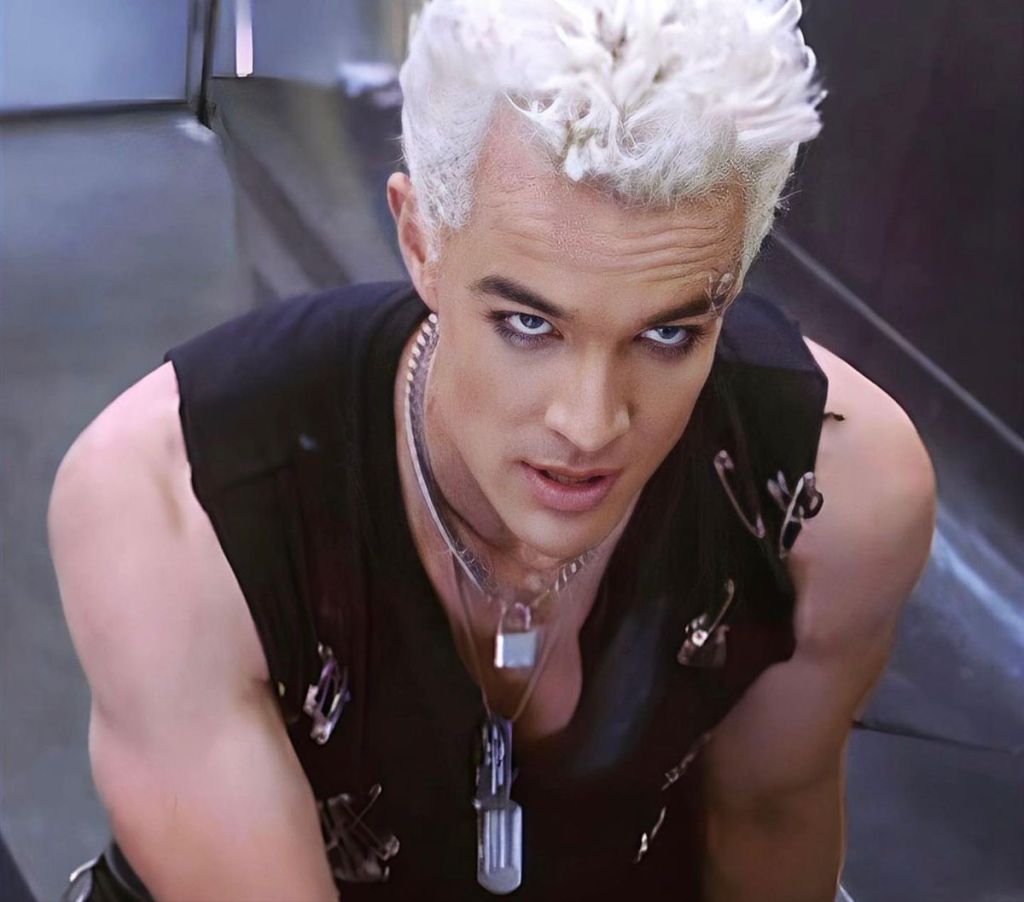
Intro: Why Do We All Love a Problematic Blonde?
There’s something eternal about the peroxide bad boy. Whether it’s Buffy’s Spike, The Lost Boys’ David, or Interview With the Vampire’s Lestat, humanity just can’t quit the dangerous blonde. He smolders, he schemes, he probably hasn’t seen sunlight in decades. And still, we swoon.
But this isn’t just about cheekbones and leather jackets. The bad boy archetype is an esoteric dream that’s haunted myth, magic, and storytelling for centuries.
The Archetype of the Fallen Star
The blonde bad boy is a Luciferian archetype, literally the “light-bringer” fallen from grace. From Milton’s Paradise Lost to pop-punk vampire lairs, this mythic figure radiates rebellion, charisma, and forbidden knowledge. We want him because he represents what we’re not supposed to touch.
✨ Literary whisper: “Better to reign in Hell, than serve in Heaven.” (Milton)
Spike as the Shadow Lover
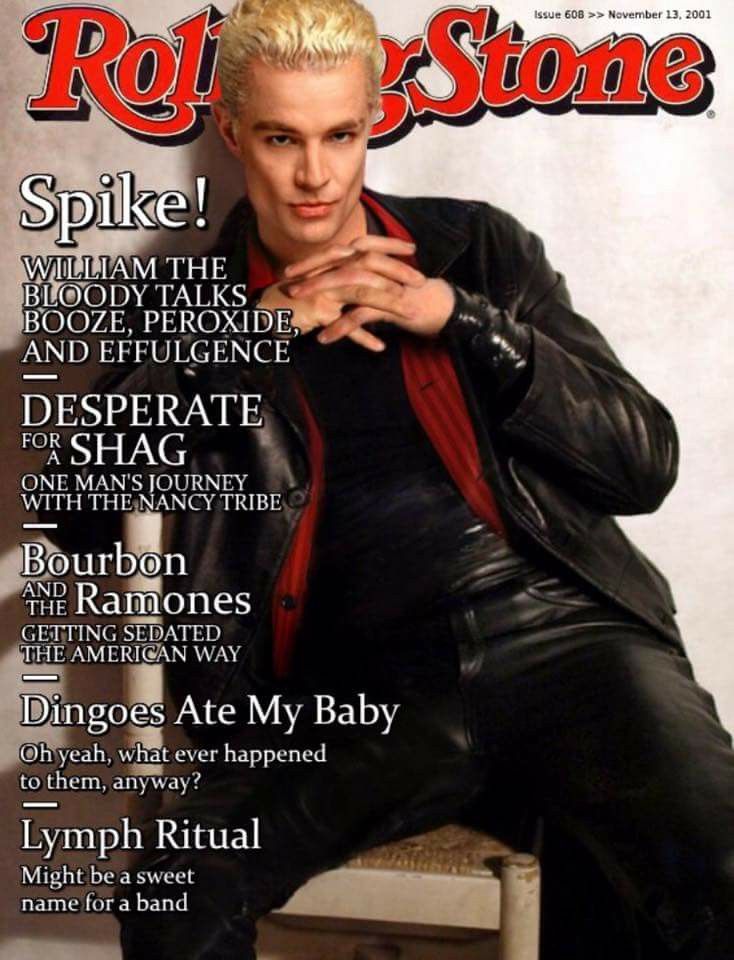
Spike isn’t just comic relief or tragic villain. He’s the embodiment of the shadow self—the part of us that craves danger, chaos, and velvet-coated passion. Jung would say he’s the anima’s leather-jacketed twin flame.
And the kicker? He loves harder than anyone. That devotion, messy and truly obsessive, is the esoteric key. Love + shadow = transformation.
The Bad Boy Across Cultures
This archetype pops up everywhere:
- Norse myth: Loki, the trickster god with chaotic blonde energy.
- Arthurian legend: Mordred, the betrayer with charm.
- Japanese anime: The cool bleach-haired rival who always steals scenes (Yu Yu Hakusho’s Hiei… or like half the Final Fantasy roster).
- Gothic novels: Byron’s heroes—brooding, pale, and definitely bad for your health.
Spike is just the 90s TV incarnation of something humans have always adored: the beautiful danger wrapped in smirk and smudge of eyeliner.
How to Work With the Archetype (Without Dating Him)
- Channel the Energy: Leather jacket + eyeliner = confidence ritual.
- Acknowledge Your Shadow: Loving the bad boy is really about loving the untamed parts of yourself.
- Keep Boundaries: Archetypes belong in art, ritual, and fandom… not necessarily in your DMs.
Sidebar Citations 🕯️
- Carl Jung, The Archetypes and the Collective Unconscious (1959) — foundational work on the shadow self and archetypes. Stanford Encyclopedia of Philosophy: Jung’s Archetypes
- John Milton, Paradise Lost (1667) — Lucifer as the ultimate rebellious, charismatic figure.
- Lord Byron, Preface to Childe Harold’s Pilgrimage (1812) — origin of the “Byronic hero,” brooding, magnetic, and doomed.
- Camille Paglia, Sexual Personae (1990) — analysis of the dangerous allure of transgressive masculine figures.
- Joss Whedon et al., Buffy the Vampire Slayer (1997–2003) — Spike as the modern pop-cultural incarnation of the archetype.
- Anne Rice, Interview With the Vampire (1976) — Lestat as another blonde seducer embodying the same archetype.
- BBC: Why We Love the Bad Boy

Outro: Love at First Bite
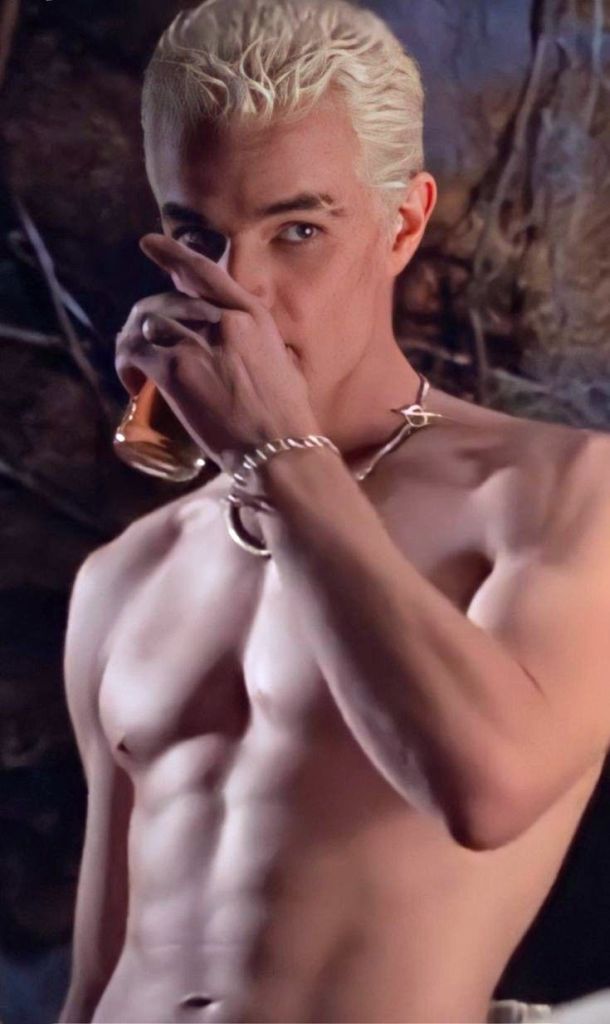
The blonde bad boy isn’t going away—he’s an eternal archetype. He’s chaos, he’s desire, he’s the shadow with perfect cheekbones. And every time we fall for him, we’re really falling for the part of ourselves that longs to rebel, love recklessly, and dance in the dark.
So yes, we’ll always love Spike. He’s not just a character—he’s an initiation.
 The Cosmic Cauldron
Leave a comment